

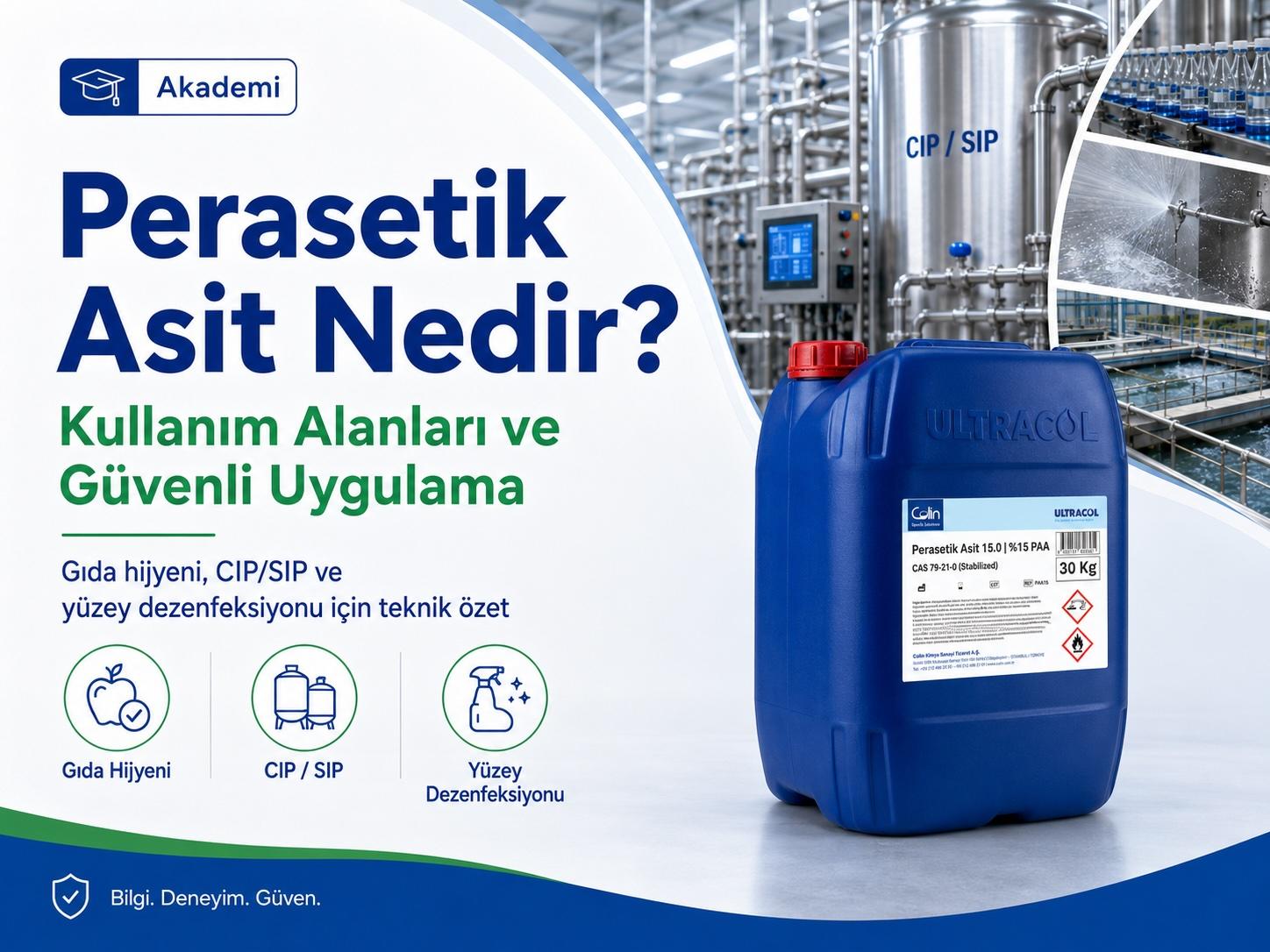
Kısa Özet
Perasetik asit, peroksiasetik asit veya kısa adıyla PAA olarak bilinen güçlü oksitleyici karakterde bir organik perasittir. Mikroorganizmalar üzerinde oksidatif hasar oluşturarak dezenfeksiyon etkisi gösterir. Doğru ürün seçimi, doğru ppm seviyesi, yeterli temas süresi, aktif PAA kontrolü ve güvenli kullanım prosedürü profesyonel uygulamalarda kritik öneme sahiptir.
İçindekiler
Perasetik Asit Nedir?
Perasetik asit, güçlü oksitleyici karaktere sahip organik bir perasittir. Kimyasal olarak asetik asit ve hidrojen peroksit dengesi içinde bulunan aktif oksijen bazlı bir bileşik olarak değerlendirilir. Literatürde perasetik asit, peroksiasetik asit, ethaneperoxoic acid, peroxyacetic acid veya kısa adıyla PAA olarak geçer.
Perasetik asit, özellikle dezenfeksiyon ve sanitasyon uygulamalarında tercih edilir. Bunun başlıca nedeni, hücre yapıları üzerinde oksidatif hasar oluşturabilmesi, klor içermemesi, hızlı etki gösterebilmesi ve uygun koşullarda asetik asit, oksijen ve su gibi daha basit bozunma ürünlerine ayrılabilmesidir.
Ticari perasetik asit ürünleri genellikle yalnızca saf perasetik asit içermez. Ürün formülasyonu; perasetik asit, hidrojen peroksit, asetik asit, su ve stabilizatör bileşenlerinin dengeli karışımı şeklindedir. Bu denge yapısı nedeniyle ürünün aktif PAA değeri zamanla, sıcaklıkla, depolama koşullarıyla ve kontaminasyonla değişebilir.
Perasetik Asidin Kimyasal Kimliği
Perasetik asit, asetik asidin peroksi türevi olarak tanımlanabilir. Molekül yapısında peroksi bağı bulunur. Bu bağ, bileşiğin yüksek oksidatif reaktivitesinin temel nedenlerinden biridir.
| Parametre | Bilgi |
|---|---|
| Yaygın adı | Perasetik Asit |
| İngilizce adı | Peracetic Acid |
| Diğer adı | Peroksiasetik Asit / Peroxyacetic Acid |
| Kısa adı | PAA |
| CAS No | 79-21-0 |
| Molekül formülü | C2H4O3 |
| Yapısal gösterim | CH3COOOH |
| Kimyasal sınıf | Organik perasit / oksitleyici bileşik |
| Temel fonksiyon | Dezenfeksiyon, sanitasyon, oksidatif temizlik, biyofilm kontrolü |
Perasetik Asidin Denge Kimyası
Ticari perasetik asit çözeltileri genellikle bir denge sistemi olarak değerlendirilir. Bu sistemde asetik asit ve hidrojen peroksit, uygun koşullarda perasetik asit ve su ile dengededir:
Bu denge yapısı perasetik asit ürünlerinin karakterini belirler. Ürün içinde aktif PAA yanında hidrojen peroksit, asetik asit, su ve stabilizatörler bulunabilir. Bu nedenle perasetik asit ürünleri depolama süresi boyunca tamamen sabit kalan ürünler değildir. Sıcaklık, ışık, metal iyonları, kirlenme, kapak ve ambalaj uygunluğu gibi faktörler ürün stabilitesini etkileyebilir.
Stabiliteyi Etkileyen Faktörler
- Yüksek sıcaklık
- Doğrudan güneş ışığı
- Metal iyonları ve metal kontaminasyonu
- Organik madde kontaminasyonu
- Alkali maddelerle temas
- Uygunsuz ambalaj veya uygunsuz kapak kullanımı
- Uzun depolama süresi
- Kirli ekipmanla ürün alma veya geri kontaminasyon
Perasetik Asit Nasıl Etki Gösterir?
Perasetik asidin dezenfeksiyon etkisi temel olarak oksidatif reaksiyonlara dayanır. Aktif oksijen yapısı sayesinde mikroorganizmaların hücre duvarı, hücre zarı, proteinleri, enzim sistemleri ve genetik materyal çevresindeki yaşamsal yapılar üzerinde hasar oluşturabilir.
Oksidatif etki; protein denatürasyonu, hücre duvarı geçirgenliğinin bozulması, enzim fonksiyonlarının baskılanması, sülfhidril ve kükürt bağlarının oksidasyonu gibi mekanizmalarla ilişkilendirilir. Bu nedenle perasetik asit, yalnızca yüzey hijyeninde değil; CIP, kapalı devre sistemler, proses ekipmanları ve kritik hijyen uygulamalarında da tercih edilir.
Etkinliği Belirleyen Ana Parametreler
- Aktif PAA konsantrasyonu
- Temas süresi
- Sıcaklık
- pH
- Organik yük miktarı
- Yüzey veya sistem tipi
- Su kalitesi
- Hedef mikroorganizma tipi
- Çözeltinin tazeliği
- Hazırlanan çözeltinin gerçek aktif PAA değeri
Literatürde Perasetik Asidin Mikrobiyal Etkinliği
Literatürde perasetik asit; bakteriler, mayalar, küfler, virüsler ve uygun koşullarda spor formları üzerinde etkili oksidatif dezenfektanlardan biri olarak değerlendirilir. Ancak etkinlik, her zaman uygulama koşullarına bağlıdır. Aynı ppm değeri, temiz yüzeyde farklı; yüksek organik yük bulunan bir sistemde farklı sonuç verebilir.
| Hedef / Koşul | Literatürden Genel Bilgi | Pratik Yorum |
|---|---|---|
| Gram pozitif / gram negatif bakteriler | Düşük ppm seviyelerinde kısa temas sürelerinde etkili olabilir. | Temiz yüzeylerde düşük-orta ppm aralıkları yeterli olabilir; organik yük varsa doz artırımı gerekebilir. |
| Maya ve küfler | Oksidatif mekanizma nedeniyle maya ve küf kontrolünde kullanılabilir. | Gıda ve içecek tesislerinde yüzey, dolum alanı ve ekipman hijyeninde önemlidir. |
| Virüsler | Virüs tipine ve ortama bağlı olarak geniş doz aralığı gerekebilir. | Tek doz yaklaşımı doğru değildir; validasyon ve ürün talimatı esas alınmalıdır. |
| Bakteriyel sporlar | Spor formları için daha yüksek konsantrasyon ve/veya daha uzun temas süresi gerekebilir. | Sterilizasyon iddiası için özel sistem, validasyon ve mevzuat gereklidir. |
| Organik madde varlığı | Organik yük, etkinliği azaltabilir ve daha yüksek ppm ihtiyacı oluşturabilir. | Ön temizlik yapılmadan dezenfeksiyon performansı beklenmemelidir. |
Perasetik Asidin Başlıca Avantajları
Geniş Etki Spektrumu
Bakteri, maya, küf, virüs ve uygun koşullarda spor formlarına karşı oksidatif etki sağlayabilir.
Hızlı Sanitasyon
Uygun ppm ve temas süresinde hızlı hijyen uygulamalarına imkân verir.
Klor İçermez
Klor bazlı dezenfektanlara alternatif olarak değerlendirilebilir.
CIP Uygunluğu
Tank, boru, dolum sistemi ve kapalı devre ekipmanlarda kullanılabilir.
Kalıntı Yönetimi
Uygun koşullarda asetik asit, oksijen ve su gibi daha basit bozunma ürünlerine ayrılabilir.
Koku ve Yan Ürün Avantajı
Klorlu dezenfektanlara göre klorlu yan ürün riski açısından avantaj sunabilir.
Perasetik Asit Nerelerde Kullanılır?
Perasetik asit çok yönlü bir oksidatif hijyen bileşenidir. Kullanım alanı belirlenirken ürün konsantrasyonu, hedef ppm değeri, uygulama süresi, yüzey tipi, mevzuat gereklilikleri, kalıntı kontrol ihtiyacı ve işletme validasyonu birlikte değerlendirilmelidir.
1. Gıda ve İçecek Endüstrisi
Gıda ve içecek üretim tesislerinde perasetik asit; tanklar, boru hatları, dolum makineleri, karıştırıcılar, konveyörler, gıda temas yüzeyleri ve kapalı devre sistemlerde sanitasyon amacıyla kullanılabilir. Özellikle hızlı etki, klor içermeme ve kalıntı yönetimi açısından önemli bir alternatiftir.
- CIP hatları
- Paslanmaz çelik tanklar
- Boru, vana ve eşanjör sistemleri
- Dolum makineleri
- Gıda temas yüzeyleri
- Ambalaj ve ekipman hijyeni
- Maya, içecek, süt, sos, şurup ve benzeri üretim alanları
- Meyve-sebze yıkama ve proses suyu uygulamaları
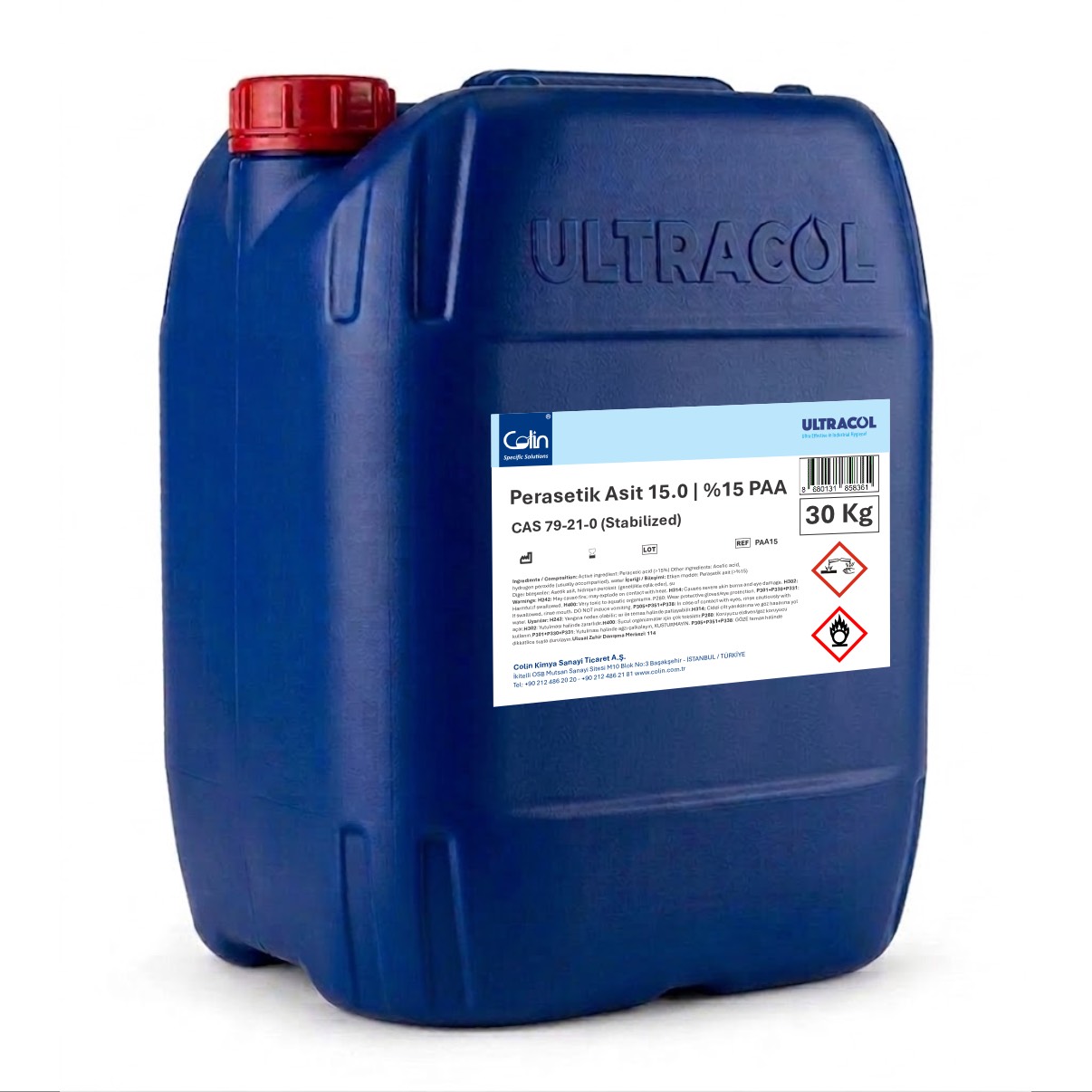
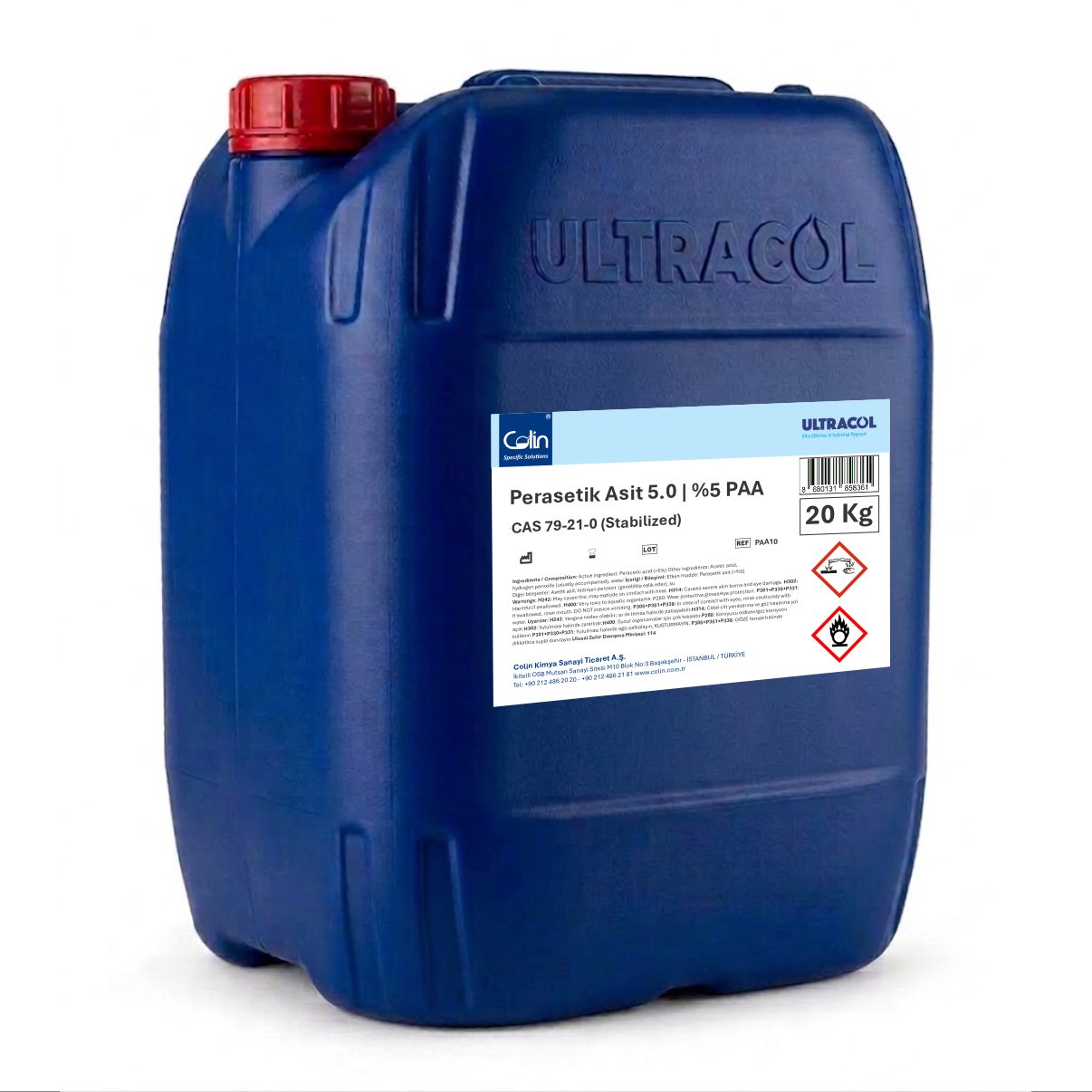
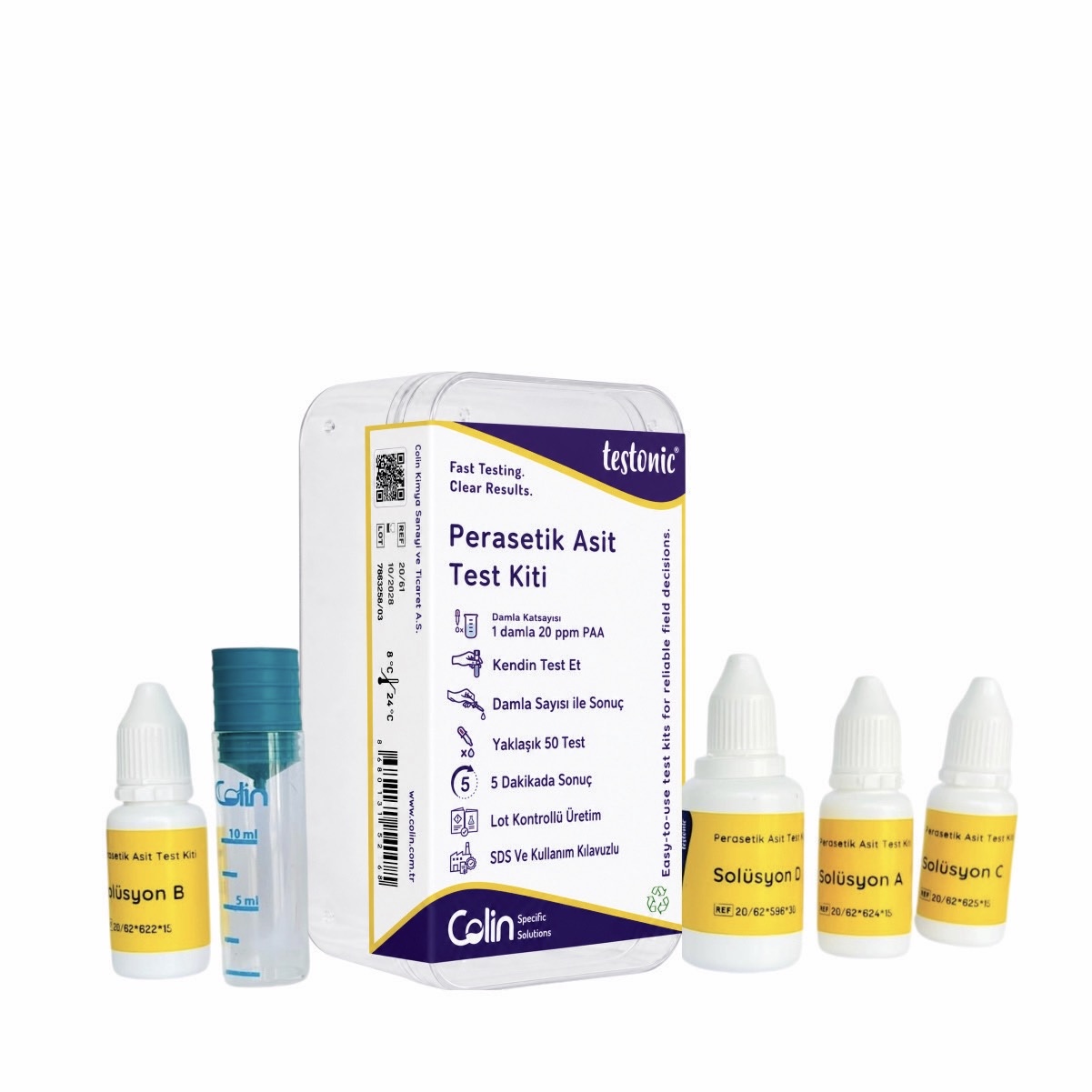
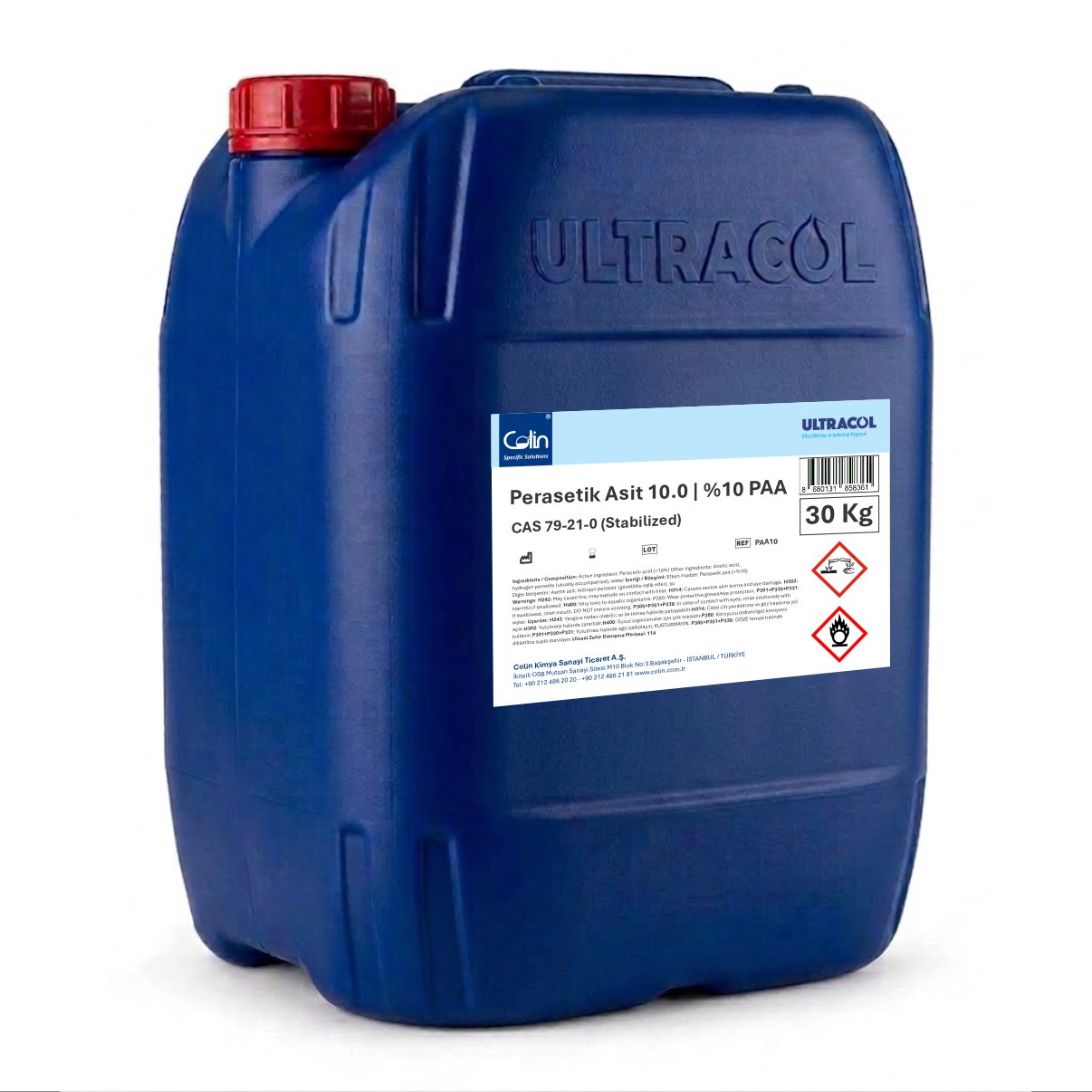
Ultracol® Perasetik Asit 5.0, Ultracol® Perasetik Asit 10.0, Ultracol® Perasetik Asit 15.0, Perasetik Asit Test Kiti
2. CIP ve Proses Hijyeni
CIP sistemlerinde perasetik asit genellikle alkali ve asidik temizlik aşamalarından sonra son sanitasyon adımı olarak kullanılır. Tank, boru hattı, filtre gövdesi, dolum sistemi ve kapalı devre proses ekipmanlarında kontrollü temas süresiyle uygulanabilir.
CIP uygulamalarında başarılı sonuç için ön temizlik yeterli yapılmalı, organik yük azaltılmalı, doğru ppm seviyesi seçilmeli, uygun temas süresi sağlanmalı ve aktif PAA değeri test edilmelidir.
Ultracol® Perasetik Asit 10.0, Ultracol® Perasetik Asit 15.0, Perasetik Asit Test Kiti
3. Yüzey Dezenfeksiyonu ve Ekipman Hijyeni
Perasetik asit; paslanmaz çelik yüzeyler, üretim ekipmanları, dolum alanları, tezgâhlar, taşıma ekipmanları ve teknik yüzeylerde kullanılabilir. Düşük ve orta konsantrasyonlu ürünler, pratik yüzey uygulamaları için tercih edilebilir.
Yüzey uygulamalarında dikkat edilmesi gereken en önemli konular; yüzeyin önceden temizlenmiş olması, uygulanan çözeltinin doğru ppm değerinde hazırlanması, temas süresinin yeterli olması ve uygulama sonrası kalıntı prosedürünün işletme talimatına göre yürütülmesidir.
Ultracol® Perasetik Asit 5.0, Perasetik Asit Test Kiti
4. Köpüklü Yıkama ve Hijyenik Temizlik
Perasetik asit bazlı özel formülasyonlar, özellikle gıda üretim alanlarında köpüklü yıkama, ekipman dış yüzey hijyeni ve HACCP/GMP uyumlu temizlik prosedürlerinde kullanılabilir. Bu tip ürünlerde yalnızca aktif PAA seviyesi değil; yüzey tutunma, köpüklenme, yıkama, kir sökme ve durulanabilirlik performansı da önemlidir.
Ultracol® FM AC - GMP ve HACCP Uyumlu Perasetik Asit Bazlı Yıkama Maddesi
5. Hijyenik Ağartma Uygulamaları
Perasetik asit bazlı hijyenik ağartıcılar; oksidatif ağartma, hijyen destekli temizlik ve proses renk yönetimi gereken uygulamalarda değerlendirilebilir. Bu ürünlerde sıcaklık, temas süresi, malzeme uyumluluğu ve proses koşulları birlikte dikkate alınmalıdır.
Forte 606 - Perasetik Asit Bazlı Hijyenik Ağartıcı
6. Su ve Atık Su Uygulamaları
Perasetik asit, su ve atık su dezenfeksiyonu alanında değerlendirilen oksidatif dezenfektanlardan biridir. Bu uygulamalarda etkinlik; suyun kimyasal yapısına, organik yüke, askıda katı madde miktarına, pH değerine, sıcaklığa, hedef mikroorganizmaya ve temas süresine bağlıdır.
Su ve atık su uygulamalarında doz belirleme çalışması laboratuvar veya saha validasyonu ile yapılmalı, aktif PAA seviyesi düzenli olarak kontrol edilmelidir. Atık su uygulamalarında PAA’nın önemli avantajlarından biri, klorlu dezenfektanlara kıyasla klorlu yan ürün oluşturma riskinin daha düşük olmasıdır.
7. Biyofilm Kontrolü
Kapalı devre hatlarda, boru sistemlerinde, tank yüzeylerinde ve sürekli nemli kalan ekipmanlarda biyofilm oluşumu hijyen açısından önemli bir problemdir. Perasetik asit, oksidatif karakteri sayesinde biyofilm kontrol programlarında destekleyici dezenfektan olarak değerlendirilebilir.
Ancak oluşmuş yoğun biyofilmin sadece dezenfektanla giderilmesi çoğu zaman yeterli olmayabilir. Ön temizlik, alkali/asidik temizlik, mekanik etki, sıcaklık, temas süresi ve düzenli kontrol programı birlikte uygulanmalıdır.
Colin Perasetik Asit Ürün Seçim Rehberi
Perasetik asit ürün seçimi yapılırken hedef uygulama, seyreltme imkânı, istenen ppm değeri, kullanım sıklığı, depolama koşulları, uygulama ekipmanı ve aktif PAA kontrol ihtiyacı birlikte değerlendirilmelidir.
| Ürün | Konsantrasyon / Tip | Kullanım Profili | Ürün Linki |
|---|---|---|---|
| Ultracol® Perasetik Asit 5.0 | %5 PAA | Genel endüstriyel hijyen, proses ve yüzey uygulamaları | İncele |
| Ultracol® Perasetik Asit 10.0 | %10 PAA | CIP, yoğun proses hijyeni ve seyreltmeli profesyonel uygulamalar | İncele |
| Ultracol® Perasetik Asit 15.0 | %15 PAA | Konsantre profesyonel kullanım, farklı ppm değerlerine seyreltme | İncele |
| Ultracol® FM AC | Perasetik asit bazlı yıkama maddesi | GMP ve HACCP uyumlu köpüklü yıkama ve hijyenik temizlik uygulamaları | İncele |
| Forte 606 | Perasetik asit bazlı hijyenik ağartıcı | Oksidatif hijyenik ağartma ve proses temizlik uygulamaları | İncele |
| Perasetik Asit Test Kiti | Aktif PAA kontrolü | Hazırlanan kullanım çözeltisinin aktif perasetik asit seviyesini kontrol etmek için | İncele |
Perasetik Asit Seyreltme Mantığı
Perasetik asit ürünleri çoğunlukla yüzde konsantrasyon veya ppm üzerinden değerlendirilir. Kullanım çözeltisi hazırlanırken temel seyreltme mantığı aşağıdaki formüle dayanır:
Burada C1 başlangıç konsantrasyonunu, V1 kullanılacak konsantre ürün hacmini, C2 hedef konsantrasyonu ve V2 hazırlanacak nihai çözelti hacmini ifade eder.
Hesaplama Örneği
%15 PAA yaklaşık olarak 150.000 ppm kabul edilir. 1 litre 1000 ppm çözelti hazırlamak için teorik olarak yaklaşık 6,7 mL %15 PAA alınır ve uygun kalite su ile 1 litreye tamamlanır.
Ancak ürünün gerçek aktif madde değeri, depolama koşulları, sıcaklık ve su kalitesi sonuca etki edebileceği için hazırlanan çözelti test kiti ile kontrol edilmelidir.
PAA Seyreltme Hesaplayıcı
Perasetik asit konsantrasyonu, hedef ppm değeri ve hazırlanacak çözelti miktarına göre gerekli ürün miktarını hesaplamak için PAA hesaplama sayfasını kullanabilirsiniz.
PAA Hesaplayıcıyı AçPerasetik Asit Konsantrasyonu Neden Test Edilmelidir?
Perasetik asit çözeltileri zamanla bozunabilir. Işık, sıcaklık, metal iyonları, organik yük, uygunsuz depolama ve uzun bekleme süresi aktif PAA miktarını azaltabilir. Bu nedenle hazırlanan kullanım çözeltisinin yalnızca teorik olarak doğru seyreltilmiş olması yeterli değildir.
Özellikle gıda üretimi, CIP hatları, dolum makineleri, proses suyu ve kritik yüzey hijyeni uygulamalarında gerçek aktif PAA seviyesi kontrol edilmelidir. Aktif PAA ölçümü, hem yetersiz doz nedeniyle hijyen riskini hem de aşırı doz nedeniyle kalıntı, maliyet veya malzeme uyumluluğu riskini azaltmaya yardımcı olur.
Aktif PAA Kontrolü İçin
Hazırlanan perasetik asit kullanım çözeltisinin aktif PAA seviyesini doğrulamak için Perasetik Asit Test Kiti kullanılabilir.
Perasetik Asit Test Kitini İncelePerasetik Asit ve Klor Karşılaştırması
Perasetik asit ve klor bazlı dezenfektanlar farklı kimyasal karaktere sahip ürünlerdir. Klor bazlı ürünler birçok uygulamada ekonomik ve etkili olmakla birlikte; koku, yüzey uyumluluğu, klorlu yan ürün oluşumu ve kalıntı yönetimi açısından bazı sınırlamalara sahip olabilir.
Perasetik asit ise klor içermeyen, oksidatif etkili ve hızlı parçalanabilen bir dezenfektan alternatifi sunar. Bu nedenle gıda tesisleri, CIP sistemleri, proses suyu uygulamaları ve çevresel hassasiyeti yüksek alanlarda önemli bir seçenek olarak değerlendirilir.
| Kriter | Perasetik Asit | Klor Bazlı Ürünler |
|---|---|---|
| Kimyasal karakter | Aktif oksijen bazlı oksitleyici | Klor bazlı oksitleyici |
| Koku | Keskin asetik/peroksit karakterli koku | Klor karakterli koku |
| Yan ürün riski | Klorlu yan ürün riski düşüktür. | Uygulama koşullarına göre klorlu yan ürün riski oluşabilir. |
| Organik yük etkisi | Organik yük etkinliği azaltabilir; ancak birçok uygulamada avantajlıdır. | Organik yük klor tüketimini artırabilir. |
| Kalıntı yönetimi | Asetik asit, oksijen ve su yönünde bozunabilir. | Klor kalıntısı ve klorlu bileşikler izlenebilir. |
Bununla birlikte perasetik asit her uygulamada tek başına en doğru seçenek olarak kabul edilmemelidir. Doğru ürün seçimi; hedef mikroorganizma, yüzey tipi, temas süresi, mevzuat, maliyet analizi ve işletme validasyonu ile birlikte yapılmalıdır.
Perasetik Asit Güvenli Kullanım ve Depolama
Perasetik asit güçlü oksitleyici özellik gösteren bir kimyasaldır. Bu nedenle ürün kullanılmadan önce ilgili SDS belgesi, teknik föy ve kullanım talimatı incelenmelidir.
Genel Depolama Önerileri
- Serin ve iyi havalandırılan alanda saklanmalıdır.
- Direkt güneş ışığından ve ısı kaynaklarından korunmalıdır.
- Metal kontaminasyonundan kaçınılmalıdır.
- Organik maddeler, indirgen maddeler, alkali kimyasallar ve uyumsuz maddelerle temas ettirilmemelidir.
- Uygunsuz kaplara aktarılmamalıdır.
- Ürün ambalajına geri döküm yapılmamalıdır.
- Ambalaj kapakları ürünün gaz çıkış karakterine uygun olmalıdır.
- Depolama alanında yanıcı/organik kirleticilerden uzak tutulmalıdır.
Kişisel Koruyucu Ekipman
- Kimyasala dayanıklı eldiven
- Koruyucu gözlük
- Yüz siperi
- Kimyasal önlük
- Uygun havalandırma
- Sıçrama riskine karşı kontrollü çalışma düzeni
Malzeme Uyumluluğu ve Korozyon Riski
Perasetik asit uygun konsantrasyon, uygun sıcaklık ve uygun temas süresi koşullarında birçok paslanmaz çelik uygulamasında kullanılabilir. Ancak yüksek konsantrasyon, uzun temas süresi, sıcaklık artışı, klorür varlığı, düşük kalite paslanmaz çelik, yüzey pürüzlülüğü veya metal iyonu kontaminasyonu korozyon riskini artırabilir.
Uygulama öncesinde paslanmaz çelik kalitesi, conta ve elastomer uyumluluğu, pompa ve vana malzemeleri, plastik parçalar, hortumlar ve ölçüm ekipmanları değerlendirilmelidir.
Sık Sorulan Sorular
Sonuç
Perasetik asit; gıda, içecek, CIP, yüzey hijyeni, su uygulamaları, köpüklü yıkama, biyofilm kontrolü ve hijyenik ağartma proseslerinde kullanılan güçlü bir aktif oksijen bileşiğidir. Profesyonel uygulamalarda doğru sonuç almak için uygun ürün seçimi, doğru seyreltme, aktif PAA kontrolü, temas süresi, malzeme uyumluluğu ve güvenli kullanım prosedürü birlikte değerlendirilmelidir.
Colin Kimya’nın perasetik asit ürün ailesi; kullanıma hazır düşük konsantrasyonlu çözümlerden konsantre profesyonel ürünlere, köpüklü yıkama ürünlerinden hijyenik ağartıcılara ve test kitlerine kadar farklı ihtiyaçlara yönelik seçenekler sunar.
Perasetik Asit Ürünlerini İnceleyin
Uygulama alanınıza uygun perasetik asit ürününü seçmek, doğru ppm değerini belirlemek ve aktif PAA kontrolü yapmak için Colin ürün ailesini inceleyebilirsiniz.