

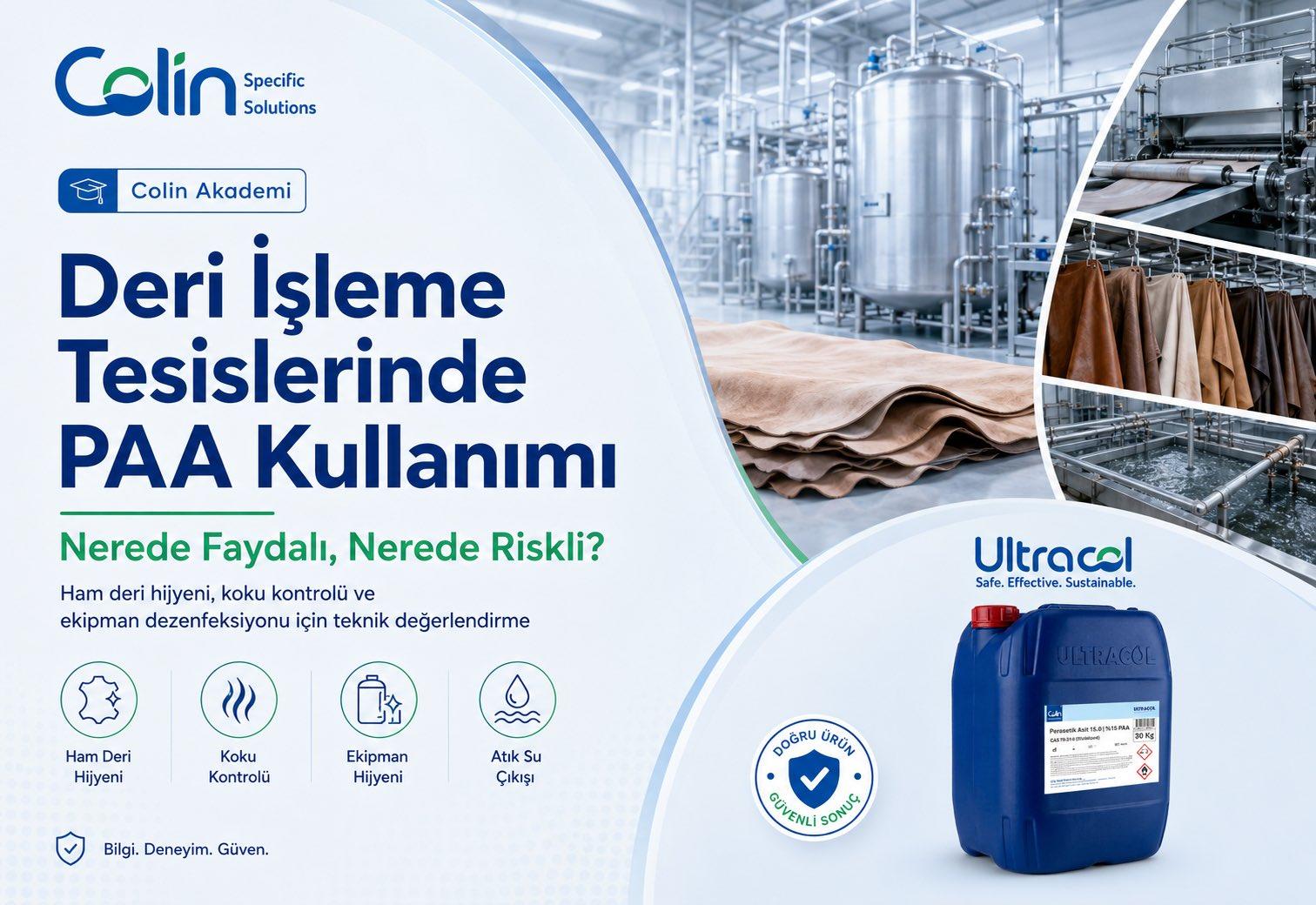
Ham deri işleyen deri işleme tesislerinde üretim kalitesini etkileyen en kritik konulardan biri mikrobiyal yükün kontrol altında tutulmasıdır. Ham deri; yüksek protein, kan, yağ, nem ve organik madde içeriği nedeniyle bakteriyel gelişime son derece açıktır. Kesim sonrası başlayan mikrobiyal aktivite, uygun şekilde kontrol edilmediğinde kısa sürede kötü koku, yüzey bozulması, kıl kökü hasarı, grain yüzeyinde zayıflama, leke oluşumu ve sonraki proseslerde kalite dalgalanmalarına yol açabilir.
Bu nedenle deri işleme tesislerinde ham deri kabulünden ıslatma aşamasına, ekipman hijyeninden atık su yönetimine kadar birçok noktada kontrollü hijyen ve mikrobiyal yük yönetimi gerekir. Geleneksel olarak bu amaçla tuzlama, klasik deri biyositleri, hipoklorit bazlı dezenfektanlar, kuaterner amonyum bileşikleri, hidrojen peroksit, ozon veya UV gibi farklı yöntemler kullanılmaktadır.
Perasetik asit, yani PAA, bu alanda değerlendirilebilecek oksijen bazlı güçlü kimyasal çözümlerden biridir. Ancak PAA’nın deri işleme tesislerindeki rolü doğru tanımlanmalıdır. PAA, deri prosesinin tamamını değiştiren tek başına bir ana proses kimyasalı değildir. Doğru kullanım alanlarında değerlendirildiğinde; ham deri kabul alanı hijyeni, koku kontrolü, yüzey ve ekipman dezenfeksiyonu, kontrollü mikrobiyal yük azaltımı ve bazı işletmelerde tuz azaltma çalışmalarına destek olabilecek oksidatif hijyen kimyasalıdır.
Bu yazıda deri işleme tesislerinde PAA kullanımının hangi aşamalarda faydalı olabileceği, hangi proseslerde risk taşıdığı ve özellikle %15 PAA gibi konsantre ürünlerin nasıl konumlandırılması gerektiği teknik açıdan ele alınmaktadır.
1. Ham Deri İşlemede Temel Problem: Mikrobiyal Yük ve Bozulma Riski
Ham deri, kesim sonrası biyolojik olarak aktif bir materyaldir. Deri yüzeyinde ve dokusunda kan, yağ, protein, dışkı kalıntısı, toprak, tuz, kıl, mikroorganizma ve çeşitli organik kirleticiler bulunabilir. Bu yapı, özellikle sıcak havalarda veya uzun bekleme sürelerinde hızlı mikrobiyal çoğalma için uygun bir ortam oluşturur.
Mikrobiyal aktivite kontrol altına alınmadığında deride şu problemler görülebilir:
-
Kötü koku oluşumu
-
Kıl kökü çevresinde bozulma
-
Grain yüzeyinde zayıflama
-
Deri yüzeyinde beneklenme ve lekelenme
-
Kollajen lif yapısında hasar
-
Islatma sonrası düzensiz şişme
-
Tabaklama ve boyama aşamalarında kalite farklılıkları
-
Nihai deride yüzey kusurları
Bu nedenle deri işleme tesisleri için ham derinin kabulü, bekletilmesi ve ıslatma prosesine hazırlanması yalnızca mekanik bir işlem değildir. Aynı zamanda kontrollü bir hijyen ve mikrobiyal yük yönetimi gerektirir.
2. Geleneksel Yaklaşım: Tuzlama, Hipoklorit ve Klasik Biyositler
Ham deri korumada en yaygın yöntemlerden biri tuzlamadır. Tuz, su aktivitesini düşürerek mikrobiyal gelişimi yavaşlatır. Özellikle uzun mesafeli sevkiyatlarda, sıcak iklimlerde veya derinin hemen işlenemediği durumlarda pratik ve ekonomik bir yöntemdir.
Ancak tuzlamanın önemli dezavantajları vardır. Tuz, ıslatma aşamasında büyük oranda atık suya geçer. Bu durum atık suda yüksek klorür, yüksek toplam çözünmüş madde ve yüksek iletkenlik problemine yol açabilir. Klorür yükü, özellikle deşarj kriterleri ve su geri kazanımı açısından işletmeyi zorlayabilir.
Tuzlamaya ek olarak veya tuzun etkisini desteklemek amacıyla bazı deri üretim tesislerinde klasik deri biyositleri kullanılır. Bu ürünler ıslatma banyosunda bakteriyel aktiviteyi sınırlamak, wet-blue veya wet-white gibi ara ürünlerin depolama stabilitesini artırmak ya da küf gelişimini önlemek amacıyla tercih edilebilir.
Yüzey, zemin, kanal ve ekipman hijyeninde ise birçok işletme hipoklorit bazlı ürünlere yönelir. Hipoklorit hızlı ve ekonomik bir dezenfektandır; ancak organik madde varlığında hızlı tüketilebilir, keskin klor kokusu oluşturabilir, bazı yüzeylerde korozyon riskini artırabilir ve klorlu yan ürün oluşumu açısından sınırlamalar taşıyabilir.
Bu nedenle deri işleme tesislerinde, özellikle ham deri kabul alanı, ekipman hijyeni, koku kontrolü ve atık su çıkışı dezenfeksiyonu gibi noktalarda alternatif veya destekleyici hijyen kimyasallarına ihtiyaç duyulabilir. PAA bu noktada değerlendirilmesi gereken önemli seçeneklerden biridir.
3. Perasetik Asit Nedir?
Perasetik asit; asetik asit ve hidrojen peroksit dengesinden oluşan güçlü oksidatif karakterde bir bileşiktir. Ticari PAA ürünleri genellikle perasetik asit, hidrojen peroksit, asetik asit, su ve stabilizatörlerden oluşur.
PAA’nın temel özelliği güçlü oksidasyon kapasitesidir. Mikroorganizmaların hücre duvarı, membran yapısı, proteinleri ve enzim sistemleri üzerinde oksidatif etki göstererek mikrobiyal inaktivasyona yardımcı olur. Bu nedenle gıda, içecek, su arıtma, CIP/SIP sistemleri, yüzey hijyeni ve endüstriyel dezenfeksiyon gibi birçok alanda kullanılır.
PAA’nın öne çıkan avantajlarından biri klor içermemesidir. Hipoklorit gibi klor bazlı dezenfektanlarla kıyaslandığında klor kokusu, klorlu yan ürün oluşumu ve bazı korozyon problemleri açısından daha avantajlı bir profil sunabilir. Parçalanma ürünleri temel olarak asetik asit, oksijen ve sudur.
Ancak PAA’nın bu avantajları, kontrolsüz kullanımda risk olmadığı anlamına gelmez. PAA güçlü bir oksitleyicidir. Konsantre formları iş güvenliği, depolama, seyreltme ve proses uyumluluğu açısından dikkat gerektirir.
4. Deri İşleme Tesislerinde PAA Kullanımının Temel Mantığı
Deri işleme tesislerinde PAA kullanımını doğru konumlandırmak gerekir. PAA, tabaklama kimyasalı gibi düşünülmemelidir. Daha doğru tanım şudur:
Perasetik asit, ham deri kabulünden ekipman hijyenine, koku kontrolünden arıtma çıkışı dezenfeksiyonuna kadar belirli noktalarda kullanılabilecek oksijen bazlı mikrobiyal yük kontrol kimyasalıdır.
Bu yaklaşım önemlidir. Çünkü deri üretimi pH, sıcaklık, tuz, sülfür, enzim, kireçlik, piklaj, krom, yağlama ve boyama gibi çok sayıda hassas değişkene bağlıdır. Güçlü oksitleyicilerin her banyoya rastgele ilave edilmesi kalite riski doğurabilir.
PAA’nın deri işleme tesislerinde mantıklı kullanım alanları şunlardır:
-
Ham deri kabul alanı hijyeni
-
Taşıma arabaları, plastik kasalar ve zeminlerin dezenfeksiyonu
-
Kanallarda ve organik yük biriken alanlarda koku kontrolüne destek
-
Dolap, varil, yıkama alanı ve ekipman çevresi hijyeni
-
Ön temizlik sonrası yüzey dezenfeksiyonu
-
Kontrollü pilot çalışma ile ıslatma banyosunda mikrobiyal yük azaltımı
-
Arıtılmış veya ön arıtılmış çıkış suyunda dezenfeksiyon desteği
Buna karşılık bazı alanlarda PAA kullanımı dikkatli değerlendirilmelidir veya önerilmemelidir. Özellikle sülfürlü prosesler, kireçlik/zırnık banyoları, piklaj, krom tabaklama, boyama ve yağlama aşamalarında kontrolsüz PAA kullanımı proses dengesini ve nihai deri kalitesini olumsuz etkileyebilir.
5. Ham Deri Kabul Alanında PAA Kullanımı
Ham deri kabul alanı, deri işleme tesislerinde mikrobiyal yükün en yoğun olduğu bölümlerden biridir. Bu alanda kan, deri sıvısı, organik artıklar, tuz, kıl, yağ ve yüzey kontaminasyonu bir arada bulunur. Zeminler, taşıma arabaları, kasalar ve bekletme alanları kısa sürede kötü koku ve biyofilm oluşumuna açık hale gelebilir.
PAA bu noktada doğrudan proses banyosundan önce, işletme hijyeni amacıyla değerlendirilebilir.
Amaç
Ham deri kabul alanında PAA kullanımının temel amacı deriyi tabaklamak veya korumak değildir. Asıl amaç; alan hijyenini iyileştirmek, mikrobiyal yükü azaltmak ve kötü koku oluşumunu baskılamaktır.
Uygulama mantığı
PAA uygulamasından önce kaba kir, kan, yağ ve organik artıklar mümkün olduğunca uzaklaştırılmalıdır. Çünkü PAA organik madde ile reaksiyona girerek tüketilir. Çok kirli yüzeylerde doğrudan dezenfeksiyon uygulamak etkinliği düşürür ve maliyeti artırır.
En doğru yaklaşım şu sıradır:
-
Kaba kirin mekanik olarak uzaklaştırılması
-
Su ile ön yıkama
-
Gerekiyorsa deterjanlı temizlik
-
Durulama
-
Seyreltilmiş PAA uygulaması
-
Yeterli temas süresi
-
Gerekli ise durulama veya doğal kuruma
Bu kullanımda PAA’nın avantajı, klorsuz oksidatif etki sağlaması ve hipoklorite göre daha düşük klor kokusu oluşturmasıdır.
Dikkat edilmesi gerekenler
Ham deri kabul alanlarında organik yük çok yüksek olduğu için PAA dozunun sahaya göre optimize edilmesi gerekir. Düşük doz etkisiz kalabilir; yüksek doz ise maliyeti artırabilir ve personel maruziyeti açısından gereksiz risk oluşturabilir.
Bu nedenle ilk uygulama, küçük bir alanda pilot olarak yapılmalı; koku, yüzey hijyeni, personel geri bildirimi ve kimyasal tüketimi birlikte değerlendirilmelidir.
6. Taşıma Arabaları, Kasalar ve Ekipman Yüzeylerinde PAA
Ham deri taşıma ekipmanları, mikroorganizmaların işletme içinde taşınmasında önemli rol oynar. Plastik kasalar, metal taşıma arabaları, forklift temas yüzeyleri, yıkama havuzları ve dolap çevreleri düzenli temizlenmediğinde çapraz kontaminasyon kaynağına dönüşebilir.
PAA bu yüzeylerde ön temizlik sonrası dezenfeksiyon amacıyla kullanılabilir.
Avantajlar
-
Klorsuz dezenfeksiyon sağlar.
-
Kötü koku oluşumunu azaltmaya yardımcı olur.
-
Organik film ve biyofilm oluşumunu baskılamaya destek olur.
-
Farklı yüzeylere seyreltilerek uygulanabilir.
-
Dozaj ve temas süresi kontrol edildiğinde pratik bir hijyen çözümü sunar.
Malzeme uyumluluğu
PAA oksitleyici bir üründür. Bu nedenle özellikle düşük kalite metal yüzeylerde, galvanizli yüzeylerde, bakır, pirinç, karbon çelik veya hassas metal ekipmanlarda korozyon riski değerlendirilmelidir. Paslanmaz çelik, uygun plastikler ve kimyasal dayanımı bilinen yüzeylerde daha güvenli kullanılabilir.
Uygulama öncesi küçük bir yüzeyde malzeme uyumluluk testi yapılması önerilir.
7. Islatma Aşamasında PAA Kullanımı
Islatma, ham derinin üretime hazırlanmasında kritik bir aşamadır. Bu aşamada tuzun uzaklaştırılması, derinin su alması, kirlerin çözülmesi ve sonraki proseslere uygun hale gelmesi hedeflenir. Aynı zamanda mikrobiyal aktivite açısından da riskli bir aşamadır.
Islatma banyolarında bakteri yükü yüksek olabilir. Bu nedenle bazı işletmeler biyosit kullanır. PAA bu noktada teorik olarak mikrobiyal yük azaltımı için değerlendirilebilir; ancak bu uygulama yüzey dezenfeksiyonu kadar basit değildir.
Neden dikkat gerekir?
Deri kollajen esaslı bir yapıdır. PAA ise oksidatif karakterdedir. Uygun olmayan doz, uzun temas süresi, düşük pH, yüksek sıcaklık veya yetersiz kontrol durumunda derinin yüzey yapısı ve lif bütünlüğü olumsuz etkilenebilir.
Olası riskler şunlardır:
-
Grain yüzeyinde zayıflama
-
Renk açılması veya ton farklılığı
-
Leke oluşumu
-
Lif yapısında oksidatif etki
-
Sonraki tabaklama ve boyama aşamalarında farklı davranış
-
Deri tutumunda değişiklik
Bu nedenle PAA’nın ıslatma banyosunda kullanımı yalnızca kontrollü pilot çalışma ile değerlendirilmelidir.
Pilot çalışma nasıl yapılmalı?
Aynı parti ham deriden iki grup alınmalıdır:
-
Kontrol grubu: Mevcut standart proses
-
Deneme grubu: Kontrollü PAA uygulaması
Karşılaştırmada şu parametreler izlenmelidir:
-
Islatma banyosu pH değeri
-
Sıcaklık
-
Temas süresi
-
Banyo kokusu
-
Mikrobiyal yük
-
Deri yüzey görünümü
-
Grain yüzeyi
-
Kıl kökü çevresi
-
Şişme davranışı
-
Sonraki kireçlik ve tabaklama performansı
-
Nihai deride renk, tutum ve yüzey kalitesi
PAA uygulaması başarılı kabul edilecekse yalnızca koku veya mikrobiyal yük azalması yeterli değildir. Nihai deri kalitesi de kontrol grubu ile karşılaştırılmalıdır.
8. Tuz Azaltma Yaklaşımında PAA’nın Rolü
Ham deri korumada tuz kullanımının azaltılması deri işleme tesisleri için önemli bir çevresel hedeftir. Tuz, işletme açısından pratik bir koruma sağlasa da atık suya yüksek klorür ve çözünmüş madde yükü getirir. Bu durum özellikle deşarj limitleri, arıtma maliyeti ve su geri kazanımı açısından sorun oluşturabilir.
PAA bu noktada “tuzun birebir yerine geçen standart çözüm” olarak sunulmamalıdır. Daha doğru yaklaşım, PAA’nın kısa süreli koruma ve mikrobiyal yük kontrolü programlarında destekleyici olarak değerlendirilmesidir.
Nerede anlamlı olabilir?
-
Ham derinin kısa sürede işleme alınabildiği işletmelerde
-
Tuz kullanımını azaltmak isteyen deri üretim tesislerinde
-
Koku ve mikrobiyal yük problemi yaşayan kabul alanlarında
-
Ön yıkama ve hijyen kontrolü iyi yönetilen tesislerde
-
Kontrollü depolama süresi olan operasyonlarda
Nerede riskli olabilir?
-
Uzun süreli ham deri depolamada
-
Sıcak iklimde kontrolsüz bekletmede
-
Derinin ne zaman işleneceğinin belirsiz olduğu durumlarda
-
Soğuk zincir veya hızlı proses imkanı olmayan işletmelerde
-
Dozaj ve proses kontrolü zayıf olan tesislerde
Bu nedenle PAA ile tuz azaltma yaklaşımı, işletmeye özel validasyon gerektirir. Bir işletmede başarılı olan uygulama, farklı ham deri tipi, sıcaklık, bekleme süresi ve proses koşullarında aynı sonucu vermeyebilir.
9. Koku Kontrolünde PAA Kullanımı
Deri işleme tesislerinde kötü koku birçok kaynaktan oluşabilir. Ham deri üzerindeki mikrobiyal aktivite, protein bozunması, kan ve yağ kalıntıları, sülfürlü prosesler, amonyak oluşumu, kanal birikintileri ve atık su sistemleri koku problemini artırabilir.
PAA koku problemini tek başına tamamen ortadan kaldırmaz. Ancak özellikle mikrobiyal kaynaklı koku oluşumunu azaltmaya yardımcı olabilir. Ayrıca bazı indirgen karakterli kokulu bileşiklerin oksidasyonuna destek olabilir.
Koku kontrolünde doğru kullanım noktaları
-
Ham deri kabul alanı
-
Kan ve organik yük biriken zeminler
-
Yıkama kanalları
-
Taşıma arabaları
-
Plastik kasalar
-
Dolap çevreleri
-
Arıtma öncesi bekleme alanları
Kritik uyarı
PAA, sülfürlü kireçlik atıklarıyla kontrolsüz temas ettirilmemelidir. Deri işleme proseslerinde sodyum sülfür veya sodyum hidrosülfür kullanılan aşamalar bulunabilir. Bu tip indirgen kimyasallarla oksitleyici PAA’nın kontrolsüz teması güvenlik ve proses açısından risklidir.
Koku kontrolü yapılacak alanda sülfürlü banyo, sülfürlü çamur veya indirgen kimyasal kalıntısı varsa uygulama öncesi teknik değerlendirme yapılmalıdır.
10. Atık Su ve Arıtma Tarafında PAA
Deri işleme tesislerinden kaynaklanan atık sular genellikle yüksek organik yük, yüksek COD, yüksek TDS, sülfür, krom, yağ, kıl, askıda katı madde ve değişken pH içerebilir. Bu nedenle PAA, deri endüstrisi atık suyunda ana arıtma kimyasalı olarak düşünülmemelidir.
PAA’nın atık su tarafındaki daha doğru rolü, ön arıtma ve ana arıtma aşamalarından sonra dezenfeksiyon desteği sağlamaktır.
Uygun kullanım yaklaşımı
-
Ön çöktürme yapılmış olmalı
-
Askıda katı madde azaltılmış olmalı
-
Organik yük makul seviyeye düşürülmüş olmalı
-
Gerekirse koagülasyon/flokülasyon uygulanmış olmalı
-
PAA son dezenfeksiyon veya mikrobiyal yük azaltımı amacıyla değerlendirilmelidir
Ham atık suya doğrudan PAA verilmesi çoğu durumda ekonomik olmayabilir. Çünkü yüksek organik yük PAA’yı hızla tüketir. Bu da yüksek kimyasal tüketimi ve düşük verim anlamına gelir.
Arıtma tarafındaki avantajlar
-
Klorsuz dezenfeksiyon alternatifi sunabilir.
-
Klorlu yan ürün riskini azaltabilir.
-
Son çıkış suyunda mikrobiyal yük kontrolüne destek olabilir.
-
Dozaj pompası ile kontrollü uygulanabilir.
Sınırlar
PAA; krom, yüksek COD, yüksek TDS, yağ, kıl veya askıda katı madde problemlerini tek başına çözmez. Bu nedenle arıtma sisteminde koagülasyon, çöktürme, biyolojik arıtma, filtrasyon, ileri oksidasyon veya membran prosesleri gibi teknolojilerin yerine konumlandırılmamalıdır.
11. %15 PAA Neden Tercih Edilebilir?
%15 PAA, konsantre bir profesyonel kullanım ürünüdür. Deri işleme tesisleri gibi büyük hacimli ve çok noktalı uygulama ihtiyacı olan işletmelerde, doğru seyreltme ve dozaj sistemiyle avantaj sağlayabilir.
Konsantre kullanım avantajı
%15 PAA, düşük konsantrasyonlu ürünlere göre daha az depolama hacmi gerektirir. Aynı aktif madde miktarı daha küçük ambalaj hacmiyle taşınabilir. Bu durum lojistik ve stok yönetimi açısından avantaj sağlar.
Farklı kullanım noktalarına uyarlanabilir
Aynı ürün, uygun seyreltme ile farklı amaçlara göre değerlendirilebilir:
-
Yüzey hijyeni
-
Ekipman dezenfeksiyonu
-
Koku kontrolü
-
Kanal uygulamaları
-
Atık su çıkışı dezenfeksiyonu
-
Kontrollü pilot ile ıslatma banyosu denemesi
Dozaj sistemiyle daha güvenli kullanım
%15 PAA’nın elle ve kontrolsüz şekilde kullanılması önerilmez. Dozaj pompası, seyreltme ünitesi veya kontrollü hazırlama prosedürü ile kullanılması daha güvenlidir. Bu yaklaşım hem iş güvenliği hem de maliyet kontrolü sağlar.
12. %15 PAA Kullanımında Riskler
%15 PAA’nın avantajları kadar riskleri de doğru anlatılmalıdır. Bu, hem teknik güvenilirlik hem de sorumlu ürün kullanımı açısından önemlidir.
İş güvenliği riski
%15 PAA güçlü oksitleyicidir. Göz, deri ve solunum yolları için tahriş edici olabilir. Konsantre ürünle çalışırken uygun kişisel koruyucu ekipman kullanılmalıdır.
Gerekli önlemler:
-
Kimyasala dayanıklı eldiven
-
Koruyucu gözlük veya yüz siperi
-
Uygun iş kıyafeti
-
İyi havalandırma
-
Göz duşu ve acil durulama imkanı
-
Eğitimli personel
-
Orijinal ambalajda depolama
-
Uyumsuz kimyasallardan ayrı tutma
Kimyasal uyumsuzluk
PAA; indirgen maddeler, sülfürlü kimyasallar, bazı metaller, alkali maddeler ve organik kirleticilerle reaksiyona girebilir. Deri işleme tesislerinde özellikle sülfürlü kireçlik prosesleri bulunduğu için bu konu çok önemlidir.
PAA şu alanlarda kontrolsüz kullanılmamalıdır:
-
Sodyum sülfür bulunan banyolar
-
Sodyum hidrosülfür bulunan ortamlar
-
Kireçlik/zırnık banyoları
-
Sülfürlü atık çamurları
-
İndirgen kimyasalların bulunduğu tanklar
-
Metal kontaminasyonu yüksek kaplar
Deri kalitesi riski
Ham deri üzerinde doğrudan veya banyo içinde kullanılacaksa doz, süre, pH ve sıcaklık kontrol edilmelidir. Aksi halde oksidatif etki derinin yüzey kalitesini etkileyebilir.
Organik yükte hızlı tüketim
PAA; kan, protein, yağ, kıl ve organik madde varlığında hızla tüketilebilir. Bu nedenle temizlik yapılmadan kullanılan PAA ekonomik olmayabilir. En iyi sonuç için “önce temizlik, sonra dezenfeksiyon” prensibi uygulanmalıdır.
13. PAA’nın Kullanılabileceği ve Kullanılmaması Gereken Alanlar
Aşağıdaki değerlendirme, deri işleme tesislerinde PAA kullanımı için pratik bir rehber niteliğindedir.
| Proses / Alan | PAA Kullanımı | Değerlendirme |
|---|---|---|
| Ham deri kabul alanı | Uygun | Ön temizlik sonrası hijyen ve koku kontrolü için değerlendirilebilir. |
| Taşıma arabaları ve kasalar | Uygun | Seyreltilmiş kullanım ile çapraz kontaminasyon azaltılabilir. |
| Zemin ve kanal hijyeni | Uygun | Organik yük temizlendikten sonra daha etkili olur. |
| Dolap/varil çevresi | Uygun | Ekipman çevresi hijyeninde kullanılabilir. |
| Islatma banyosu | Kontrollü pilot gerekir | Deri kalitesi mutlaka izlenmelidir. |
| Tuz azaltma çalışmaları | Pilot gerekir | Tuzu tamamen ikame etmek yerine destekleyici yaklaşım uygundur. |
| Kireçlik/zırnık banyosu | Önerilmez | Sülfürlü ortamlarla uyumsuzluk riski vardır. |
| Piklaj banyosu | Genelde önerilmez | Proses dengesini bozabilir. |
| Krom tabaklama | Önerilmez | Redoks ve proses uyumu açısından risklidir. |
| Boyama/yağlama | Önerilmez | Renk, tutum ve yardımcı kimyasal uyumu etkilenebilir. |
| Arıtma çıkışı | Uygun | Ön arıtma sonrası dezenfeksiyon desteği olarak değerlendirilebilir. |
| Ham atık su | Genelde ekonomik değildir | Yüksek organik madde PAA tüketimini artırır. |
14. Deri İşleme Tesisleri İçin Önerilen Pilot Çalışma Planı
PAA kullanımı için en doğru yaklaşım, doğrudan tüm işletmeye yaymak yerine kontrollü pilot çalışma yapmaktır. Pilot çalışma hem teknik performansı hem de maliyet etkisini objektif olarak gösterir.
Aşama 1: Alan hijyeni denemesi
İlk deneme ham deri kabul alanında yapılabilir. Bu aşama en güvenli başlangıç noktalarından biridir.
İzlenecek parametreler:
-
Uygulama öncesi ve sonrası koku durumu
-
Yüzey temizliği
-
Personel geri bildirimi
-
Kimyasal tüketimi
-
Yüzey malzeme uyumluluğu
-
Gün sonunda koku geri dönüşü
-
Kanal ve zeminlerde biyofilm görünümü
Bu aşamada amaç, PAA’nın işletme hijyenine pratik katkısını görmektir.
Aşama 2: Ekipman ve taşıma araçları denemesi
İkinci aşamada plastik kasalar, taşıma arabaları, dolap çevresi ve yıkama ekipmanları değerlendirilebilir.
İzlenecek parametreler:
-
Temizlik sonrası mikrobiyal yük
-
Koku azalması
-
Yüzeyde kalıntı hissi
-
Malzeme uyumluluğu
-
Kullanım kolaylığı
-
Günlük uygulama süresi
-
Hipoklorit kullanımında azalma potansiyeli
Aşama 3: Kontrollü ıslatma denemesi
Bu aşama daha teknik olduğu için laboratuvar veya küçük üretim ölçeğinde yapılmalıdır.
Uygulama prensibi:
-
Aynı partiden deri seçilir.
-
Bir grup mevcut prosesle işlenir.
-
Bir grup kontrollü PAA uygulamasıyla işlenir.
-
Her iki grup sonraki proseslerden geçirilir.
-
Nihai deri kalitesi karşılaştırılır.
İzlenecek parametreler:
-
pH
-
Sıcaklık
-
Temas süresi
-
Mikrobiyal yük
-
Koku
-
Şişme davranışı
-
Grain yüzeyi
-
Deri rengi
-
Tabaklama performansı
-
Boyama homojenliği
-
Nihai deri tutumu
-
Kopma, yırtılma veya fiziksel kalite parametreleri
Aşama 4: Atık su çıkışı dezenfeksiyon denemesi
Arıtma çıkışında mikrobiyal yük problemi varsa PAA son dezenfeksiyon amacıyla değerlendirilebilir.
İzlenecek parametreler:
-
Giriş ve çıkış mikrobiyal yükü
-
Temas süresi
-
PAA tüketimi
-
COD üzerine etkisi
-
pH değişimi
-
Koku
-
Deşarj kriterlerine etkisi
-
Toplam maliyet
Bu aşamada PAA’nın ana arıtma kimyasalı olmadığı unutulmamalıdır. Ürün daha çok son dezenfeksiyon veya mikrobiyal yük azaltımı amacıyla değerlendirilmelidir.
15. PAA Kullanımında Başarı Kriterleri
Bir deri işleme tesisinde PAA uygulamasının başarılı sayılabilmesi için yalnızca kimyasal kullanılmış olması yeterli değildir. Başarı, ölçülebilir ve izlenebilir kriterlerle değerlendirilmelidir.
Başarı kriterleri şunlar olabilir:
-
Ham deri kabul alanında koku azalması
-
Yüzey hijyeninde iyileşme
-
Hipoklorit kullanımında azalma
-
Klor kokusunun azalması
-
Ekipman ve kanal çevresinde biyofilm oluşumunun azalması
-
Islatma banyosunda mikrobiyal yükün düşmesi
-
Nihai deri kalitesinde olumsuz değişim olmaması
-
İş güvenliği açısından yönetilebilir uygulama prosedürü
-
Kimyasal tüketiminin ekonomik seviyede kalması
-
Arıtma çıkışında mikrobiyal yük kontrolünün iyileşmesi
Bu kriterler belirlenmeden yapılan uygulamalar teknik olarak sağlıklı değerlendirilemez.
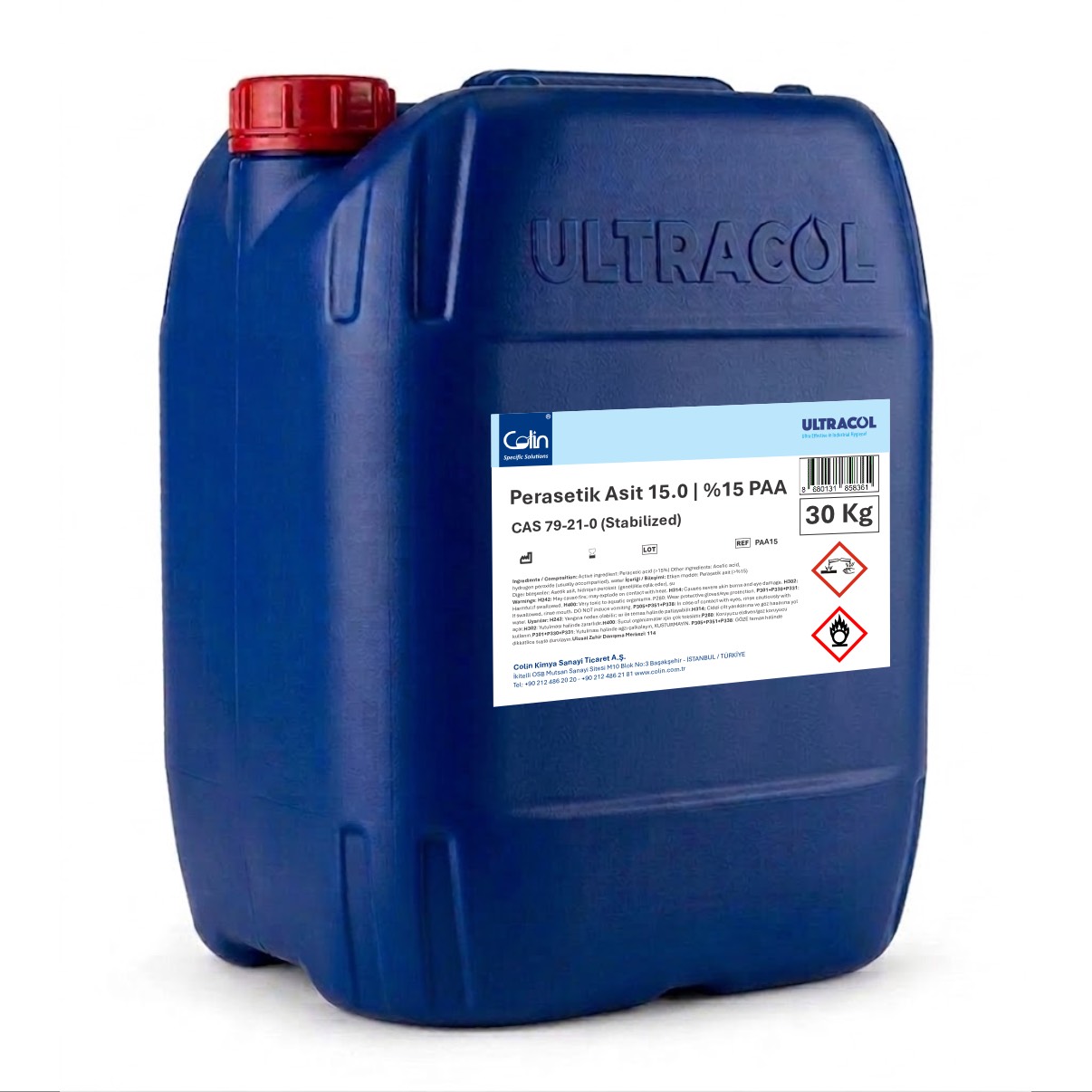
16. Ultracol® Perasetik Asit 15.0 | %15 PAA Bu Alanda Nasıl Konumlandırılabilir?
%15 PAA, deri işleme tesisleri için doğrudan ham deri üzerine kontrolsüz uygulanacak bir kimyasal olarak değil; kontrollü seyreltme ve dozajlama ile kullanılan profesyonel oksidatif hijyen çözümü olarak konumlandırılmalıdır.
Ultracol® Perasetik Asit 15.0 | %15 PAA; ham deri kabul alanı, yüzey hijyeni, ekipman dezenfeksiyonu, koku kontrolü ve ön arıtma sonrası atık su çıkışı dezenfeksiyonunda kullanılmak üzere değerlendirilebilecek konsantre perasetik asit çözeltisidir. Ürün, doğru seyreltme ve kontrollü uygulama ile deri işleme tesislerinde klorsuz hijyen yaklaşımına destek olur.
Bu konumlandırmada en önemli nokta, ürünün proses sınırlarının doğru tanımlanmasıdır. Ultracol® Perasetik Asit 15.0 | %15 PAA, kireçlik/zırnık, sülfürlü banyolar, piklaj, krom tabaklama veya boyama/yağlama aşamalarına kontrolsüz şekilde ilave edilmemelidir. En verimli ve güvenli yaklaşım, ürünü ön temizlik sonrası hijyen uygulamaları ve pilot validasyon yapılmış kontrollü proses noktaları için değerlendirmektir.
17. Sonuç: PAA Faydalıdır, Ancak Doğru Noktada Kullanılmalıdır
Deri işleme tesislerinde perasetik asit kullanımı önemli bir potansiyele sahiptir. Özellikle ham deri kabul alanlarında koku ve mikrobiyal yük kontrolü, ekipman ve yüzey hijyeni, hipoklorit kullanımının azaltılması ve arıtma çıkışı dezenfeksiyonu gibi alanlarda PAA güçlü bir alternatif olarak değerlendirilebilir.
Ancak PAA’nın her proses banyosuna ilave edilebilecek genel amaçlı bir kimyasal olmadığı unutulmamalıdır. Deri üretimi hassas bir prosestir. Kireçlik, sülfürlü banyolar, piklaj, krom tabaklama, boyama ve yağlama gibi aşamalarda kontrolsüz PAA kullanımı proses dengesini ve nihai deri kalitesini olumsuz etkileyebilir.
Bu nedenle en doğru yaklaşım, PAA’yı “ana deri proses kimyasalı” olarak değil; “ham deri hijyeni ve işletme dezenfeksiyonunda kontrollü kullanılan oksijen bazlı destek kimyasalı” olarak değerlendirmektir.
%15 PAA gibi konsantre ürünler ise özellikle profesyonel işletmelerde, dozaj pompası veya kontrollü seyreltme prosedürü ile kullanıldığında farklı hijyen noktalarına uyarlanabilir. Başarılı bir uygulama için ön temizlik, doğru seyreltme, uygun temas süresi, iş güvenliği, malzeme uyumluluğu ve pilot validasyon mutlaka dikkate alınmalıdır.
Sonuç olarak PAA, deri işleme tesislerinde doğru noktada kullanıldığında değerli bir çözüm olabilir. Fakat en yüksek fayda, ürünün proses sınırları bilinerek, kontrollü ve ölçülebilir bir pilot çalışma ile uygulanması sayesinde elde edilir.
Ultracol® Perasetik Asit 15.0 | %15 PAA hakkında teknik bilgi ve uygulama önerisi için Colin Kimya ile iletişime geçebilirsiniz.
Ürün sayfası: Perasetik Asit 15.0 | %15 PAA